


Success Story
Local news

How Miami Community News cut 105 hours a week from a 35-podcast pipeline
~105
hours saved per week
35
podcasts per week
Company Size
Local publisher
Company Industry
Local news
The Problem
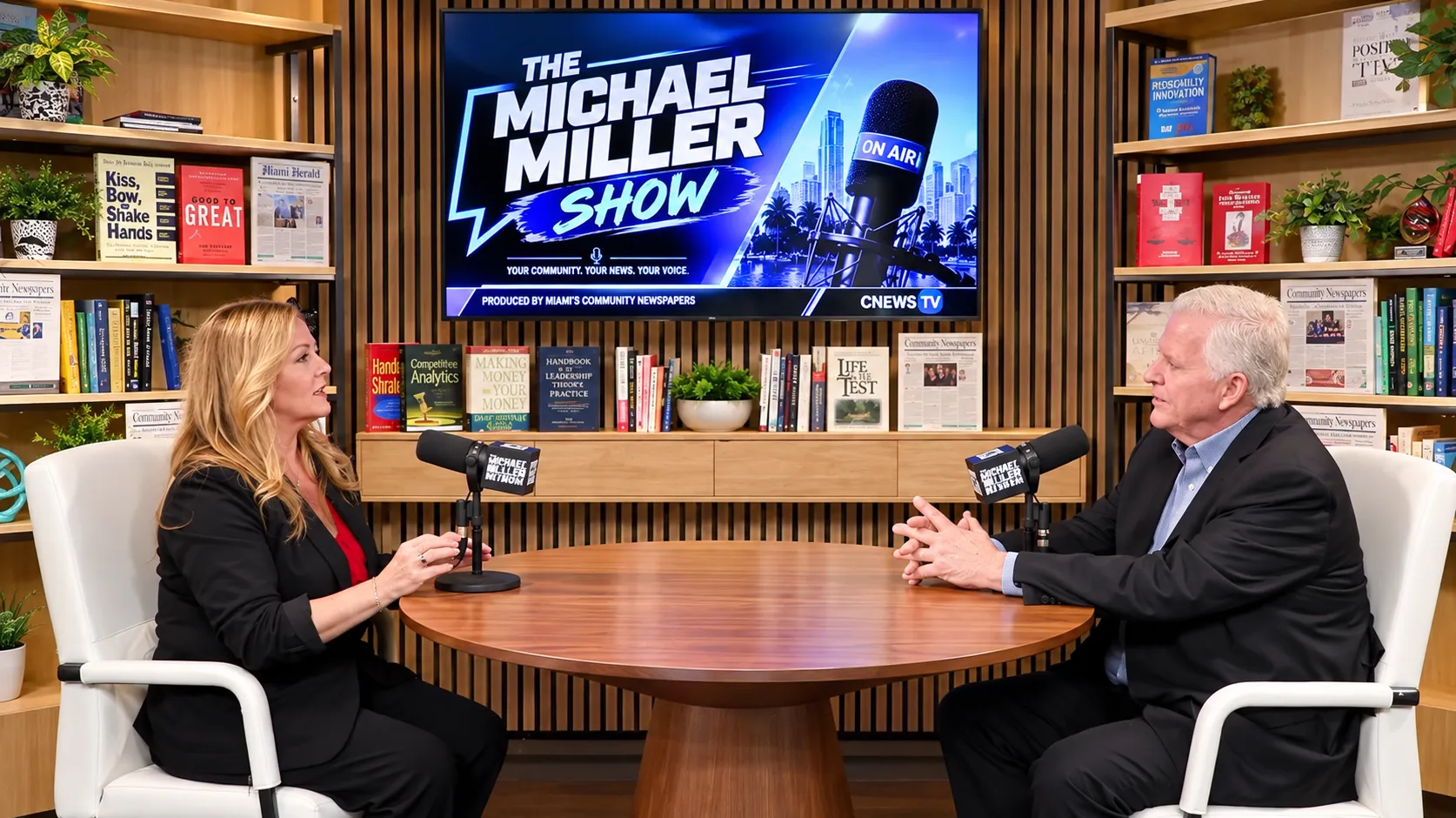
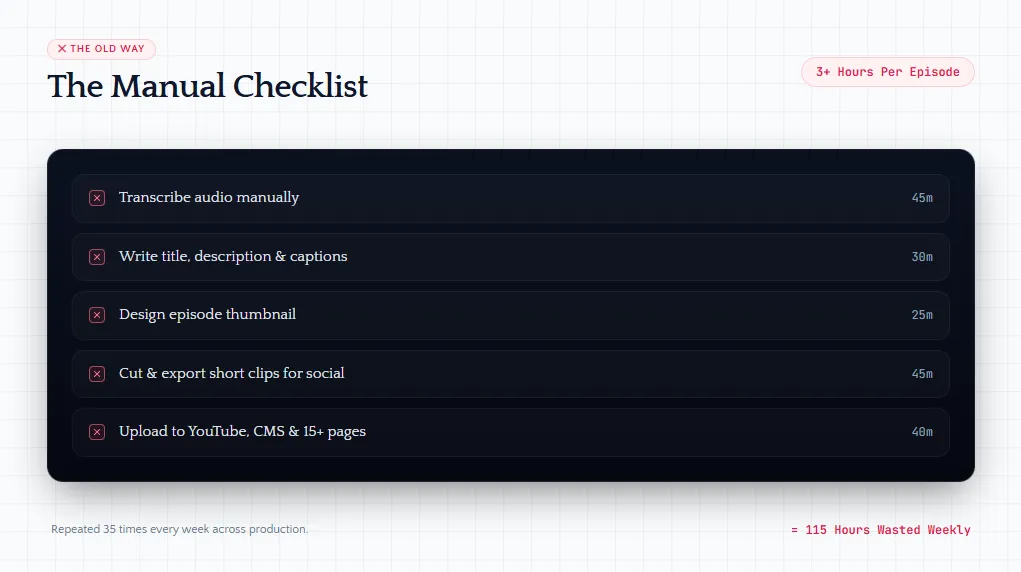
Miami Community News runs a high-volume podcast slate — about 35 episodes a week. The recording itself was not the bottleneck. After each show, the editor still had about three hours of post-production: titles, descriptions, transcripts, a web article, uploads, and short clips.
They already had a habit that worked for them. The editor dropped finished files into Google Drive the same way they always had. Anything we built had to stay that familiar. Retraining the newsroom on a new upload tool was off the table.
At that volume, the manual checklist could not keep up with what they had promised advertisers and guests. Clips, posts, and guest follow-up slipped, even when the episode itself was ready.
The Solution
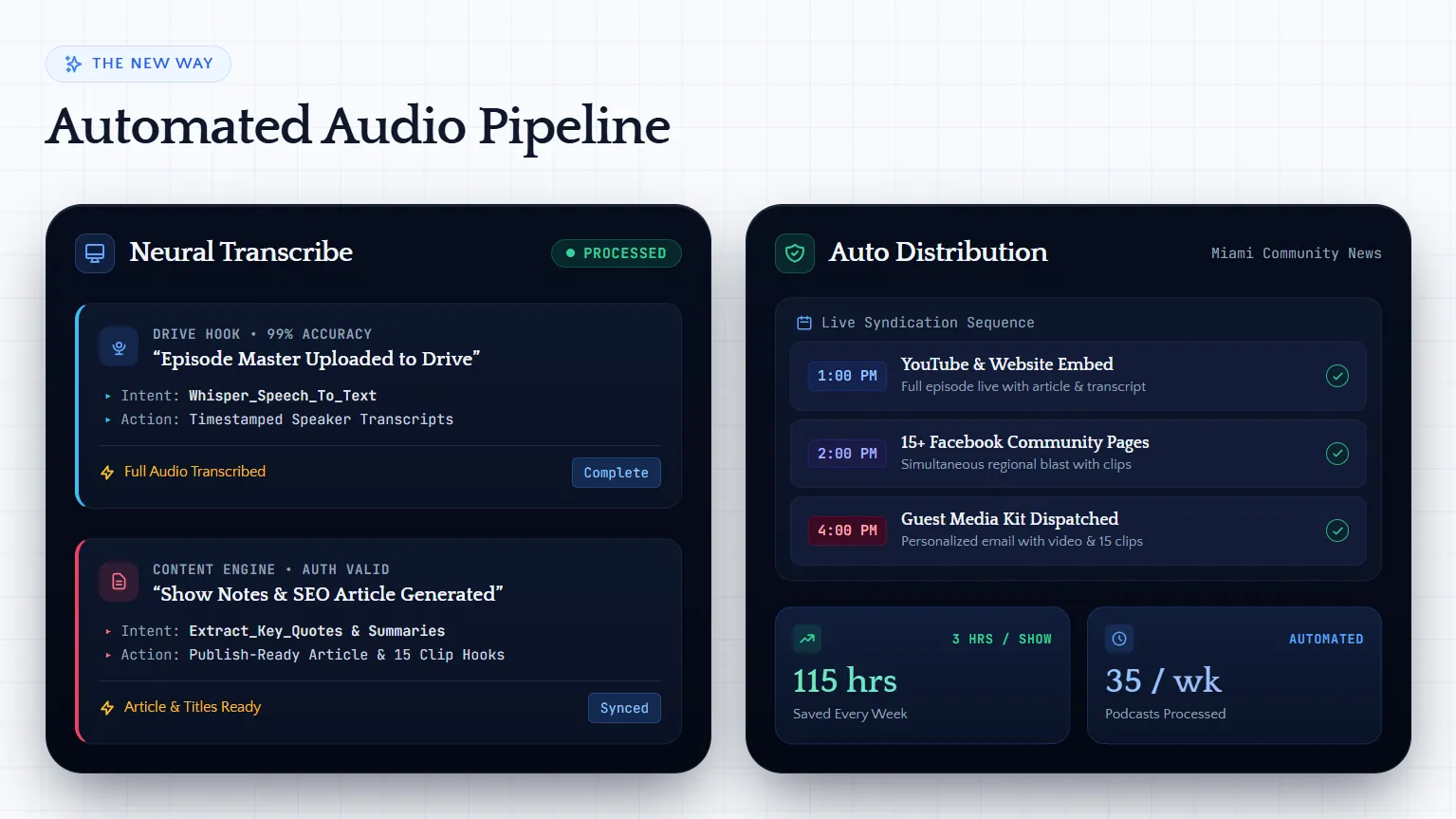
OTR Digital kept the Drive drop as the start of the job and added a dashboard on top. Once a file lands in Drive, the pipeline starts without anyone re-entering the episode.
The system prepares the title, description, and transcript, writes an article for their websites, and gets the episode ready to post. It publishes across more than 15 Facebook accounts, YouTube, and their site embed. When everything is up, it drafts a guest email with the downloads and videos.
It also cuts more than 15 short clips per episode for Instagram and Facebook, so the team can pick what to post instead of starting from a timeline. The editor still works the way they used to. The hours after the drop are no longer a second full-time job.
The result is about 105 hours back each week, and a newsroom that can actually deliver the content it sold.
Questions
Common questions
Short answers to what people ask first.
How to automate content creation?
Start from the file the team already drops. Miami Community News puts finished podcasts in Google Drive. OTR's pipeline titles, transcribes, writes a web article, publishes to more than 15 Facebook accounts, YouTube, and the site, and cuts more than 15 short clips. About 105 hours come back each week. The editor still works in Drive.
How to repurpose podcast content?
Once the episode file is in, the same pipeline should produce the transcript, article, social clips, and guest email. That is what OTR built for Miami Community News at 35 episodes a week. The newsroom did not learn a new upload tool. Drive stays the front door. Posts, embeds, and clips come off the dashboard.
How to summarize a podcast with AI?
Transcribe the file, then draft the title, description, and article from that transcript. OTR does that when an episode lands in Google Drive for Miami Community News. The editor reviews instead of starting from a blank page. The same run prepares uploads and more than 15 short clips for Instagram and Facebook.
How do I repurpose my podcast to social media?
Cut short clips from the finished episode and write the posts from the transcript, without a second timeline edit. Miami Community News gets more than 15 clips per episode plus publishing across Facebook and YouTube. OTR starts from the Drive drop the team already used. About 105 hours a week came back at 35 shows.

Scale without adding more overhead
Book a demo to see how a custom system would run on your operation, and how we handle implementation so your team uses it.
