



The short version
By some estimates, more than 80 percent of AI projects fail. RAND reports that is about twice the failure rate of IT projects that do not involve AI. The usual reasons are not the model. The office is asked to change how it already works, the use case is vague, or nobody stays after the demo.
OTR Digital starts from the habit the team already trusts. We build a custom system on the tools you run, train the people who will use it, and keep a person on the last step.
Key takeaways
- Most AI projects fail because the work was never mapped, not because the model was weak.
- Off-the-shelf tools ask the office to change. Custom systems watch how the work already moves.
- RAND’s published line is an estimate, not an OTR statistic: more than 80 percent fail, about twice non-AI IT projects.
- Implementation is the job. Training, Miami-hosted infrastructure, and a person who still signs off.
- Resistance drops when the login stays the same and the hours come back in the first weeks.
Why AI projects fail
A generic tool asks the office to change how it works. A custom system watches how the work already moves, then takes the repetitive steps.
That sounds obvious. It is the thing most projects skip. Someone buys a seat, a prompt library, or a receptionist that does not know the stylists’ books. The team is asked to upload files to a new portal, copy notes into a second CRM, or learn a dashboard that does not match the floor. The project looks busy for a quarter. Then it sits.
RAND talked to data scientists and machine learning engineers about why this happens. The pattern they documented is familiar on an operations floor: pressure to do something with AI, weak understanding of the actual job, and no path from a demo to daily use. By some estimates, more than 80 percent of AI projects fail. That is twice the already-high rate of failure in corporate IT projects that do not involve AI.
OTR would rather walk the operation than close on a generic call. In the room, we can show you exactly where the hours come back.
What percentage of AI projects fail
Treat the 80 percent figure as a published estimate, not a law of nature. RAND cites it as “by some estimates” in The Root Causes of Failure for Artificial Intelligence Projects and How They Can Succeed. Gartner has separately reported that a large share of generative AI pilots are abandoned after proof of concept, usually for poor data, unclear value, or rising cost.
The useful question for an owner is not whether the industry average is 50 or 80. It is whether this specific checklist is worth automating. If building it takes more hours than it saves in a year, skip it. If the team has to learn a new habit for the software to work, the software will lose.
That is why we score volume before we talk about models. A task done twenty or more times a week, with rules you can name, is a candidate. A task that only lives in the owner’s head is not. The free AI readiness checklist on this site walks through that scoring.
Why custom beats off the shelf
Off-the-shelf AI is a product. It has to fit many offices, so it fits none of them closely. Custom AI is a system built around one operation.
At OneBlush, a chair-rental salon, each stylist already had a booking tool. A generic receptionist would have asked them to switch. OTR built Bella on top of those books. In the first 30 to 45 days Bella handled 200 or more calls and texts and saved 20 or more hours a week.
Field Case Managers had a legacy CRM that was not built for modern automation. Replacing it was off the table. OTR added a verification dashboard on top. Incoming email is structured, a person confirms it, then it lands in the CRM. The team saved 264 hours a year and $594,000 in operating cost over 18 months.
Miami Community News already dropped finished podcast files into Google Drive. Retraining the newsroom on a new upload tool would have killed the project. The pipeline starts from that drop. About 105 hours come back each week.
The dashboard sits on top of the habit you already have.
How to overcome resistance
People do not resist AI in the abstract. They resist another login, another checklist, and a project that makes them look slow for a month.
Keep the tools they already open. Train in the room, not from a PDF. Put a person on anything that reaches a client, a patient, or a booking. Show the hours in the first weeks, not a roadmap for next year.
That is why implementation is the first conversation at OTR, not the last. Training uses the same privacy model as the build: local models, servers we host in Miami, and SOC 2 Type 1 and Type 2. Client data stays on infrastructure we control. The team is not asked to send their week into a public chat window.
The hours come back when the system starts from the habit your team already trusts.
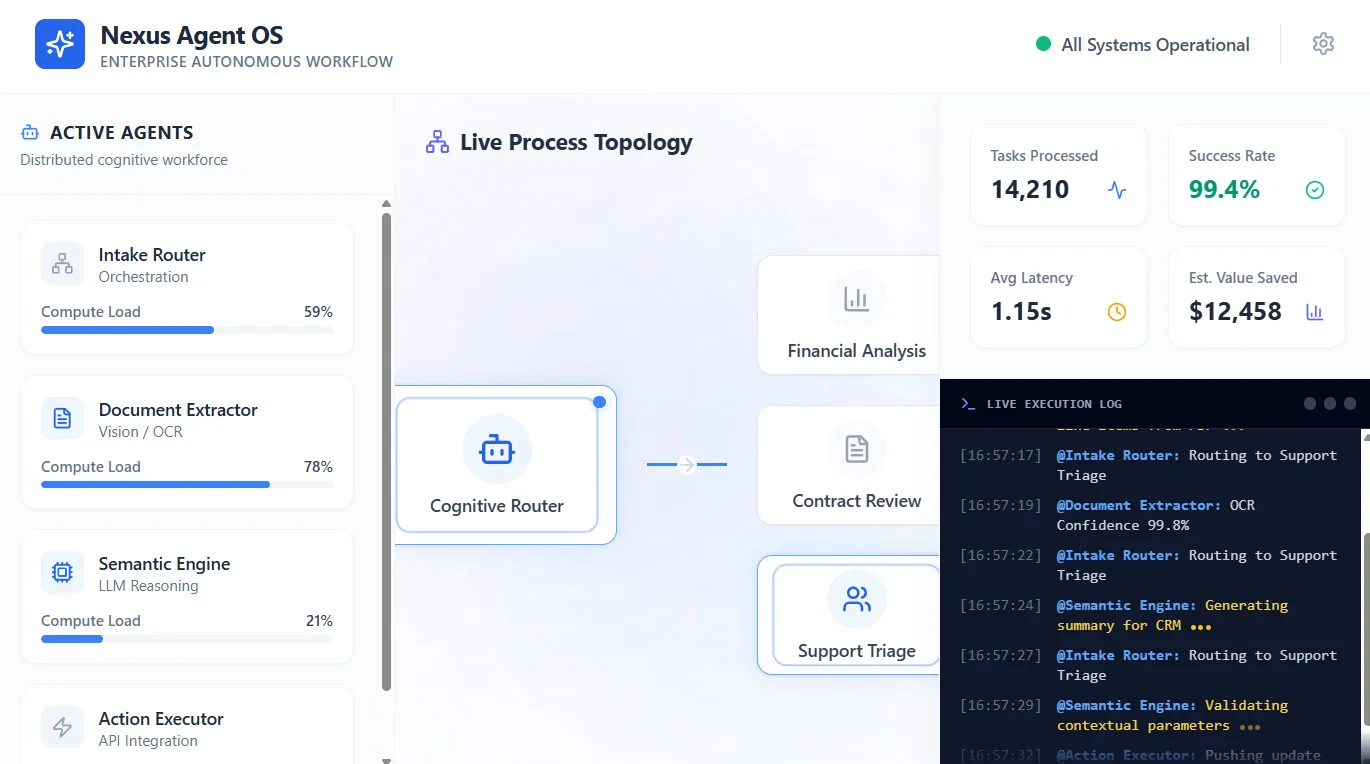
The dashboard sits on top of the habit you already have.
Common questions
Why AI projects fail?
They fail when the office is asked to change how it already works, the use case is vague, or nobody stays after the demo. RAND documents that pattern. OTR starts from the habit the team already trusts, builds on the stack you run, and stays through training. A person still signs off on the last step.
What percentage of AI projects fail?
By some estimates, more than 80 percent, about twice the rate of IT projects that do not involve AI. That line is from RAND's report on AI project failure, not an OTR statistic. The useful test for an owner is payback. If the build takes more hours than it saves in a year, skip it.
Why custom AI agents better than off-the-shelf?
Off-the-shelf tools have to fit many offices, so they fit none closely. Custom agents sit on the books, CRM, or Drive folder you already use. OneBlush, Field Case Managers, and Miami Community News all kept their stack. Hours came back because the team did not have to learn a new habit first.
Why choose custom AI over off the shelf solutions?
Because implementation is the product. A generic seat still asks your people to copy work into a new portal. OTR walks the operation, builds around it, hosts on Miami infrastructure we control, and trains in the room. Custom is not a luxury. It is how the project survives the first month.
How to overcome resistance to AI adoption?
Keep the login they already open. Train in person. Show hours in the first weeks. Put a person on anything that reaches a client. That is OTR's implementation, not a change-management slide. Resistance is usually another tool, not the idea of getting the checklist off their plate.

Get the hours back without adding headcount.
Book a demo to see how a custom system would run on your operation, and how we handle implementation so your team uses it.
